Reading a staff augmentation quote properly
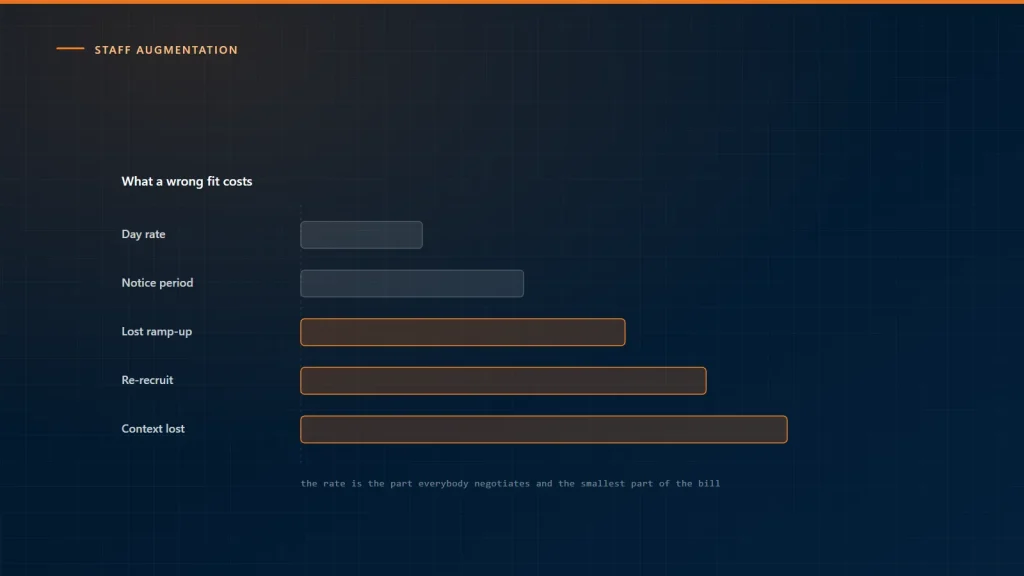
Two augmentation proposals arrive with different hourly rates and the cheaper one looks like the better deal. Sometimes it is. Often the rate difference is smaller than the difference in what a billed hour contains, and that comparison is not on the page.
What is inside the rate
Before comparing two numbers, establish that they cover the same things:
- Is it fully loaded?Equipment, licenses, workspace, connectivity, statutory costs. Some quotes exclude items that then arrive as pass-throughs.
- What is a billable hour?Does it include team meetings, standups, code review, onboarding? A rate that excludes ceremonies is not comparable to one that includes them.
- Holiday and sickness.Are absences billed? Is cover provided, at whose cost, and how quickly?
- Overtime and out-of-hours.The multiplier and what triggers it.
- Management overhead.Is there a coordinator or account manager, and are they billed as a body?
These questions usually move the effective cost more than the headline rate does.
The clauses that matter more than the rate
Replacement
If someone is not working out, what happens? A good contract has a defined window — often two weeks — where an unsuitable person is replaced without charge. Without it, you are paying to train someone into a role they cannot fill.
Notice
How much notice to end or reduce the engagement, and is it symmetric? A thirty-day notice on your side against a provider who can withdraw someone with a week’s warning is not a balanced position, and it is easy to miss.
Continuity
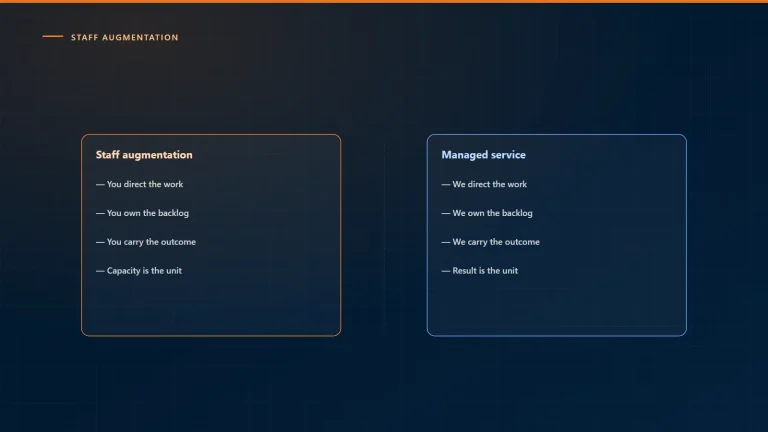
Can the provider rotate people? For augmentation the answer should be no, or not without agreement — the continuity of a specific person is most of what distinguishes this model from a managed service.
Intellectual property
Work product should vest with you unambiguously, including anything produced before the invoice is paid. Worth reading properly rather than assuming.
Rate review
When and by how much rates can change. An engagement priced attractively for six months and then re-priced has a different total cost than the one you compared.
Judging fit before the engagement starts
Rate tells you very little about whether this will work. A few things tell you more:
- Meet the actual people.Not a profile, not an account manager — the engineers who would do the work. Profiles are written to be persuasive.
- Ask about a recent failure.A provider who cannot describe one either has not been doing this long or is not being straight with you.
- Test a real problem.A short paid pilot on something genuine tells you more than any interview, and both sides learn something they cannot learn otherwise.
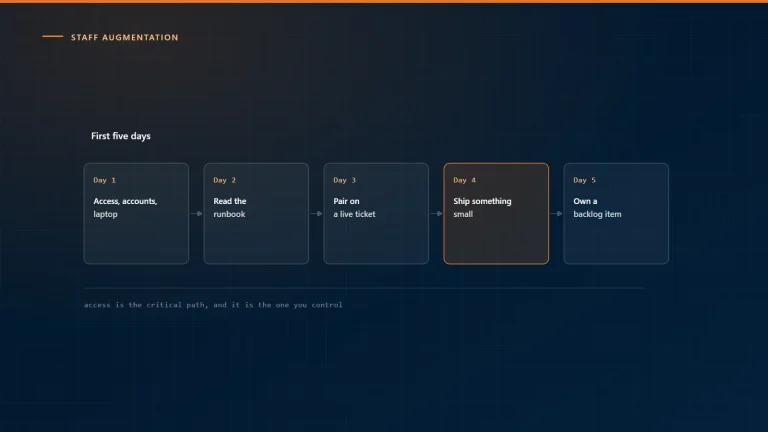
- Check the overlap and the domain.How many hours they share with your working day, and whether they have worked in your domain before. Domain familiarity compresses ramp-up more than seniority does.
Where the rate difference usually comes from
A materially lower rate is usually explained by one of: a more junior team than the profiles suggest, higher turnover so you re-onboard repeatedly, less overlap with your working day, or a management layer removed so coordination falls to you. Any of those can be an acceptable trade if you have chosen it. None of them is acceptable as a surprise.
Ask directly what explains the difference. A provider with a straightforward answer — lower cost base, a particular location, a smaller overhead — is more reassuring than one who cannot account for it.
What to compare instead
Total cost over the engagement’s realistic length, including onboarding time you will pay for before anything ships, cover during absence, and the replacement risk if the first person is wrong. That number tends to rank proposals differently from the hourly rate, and it is the one you will actually spend.
Our staff augmentation proposals state what a billed hour includes and what the replacement and notice terms are, rather than leaving them to the contract’s back half. Ask for the terms alongside the rate — it is the comparison worth making.