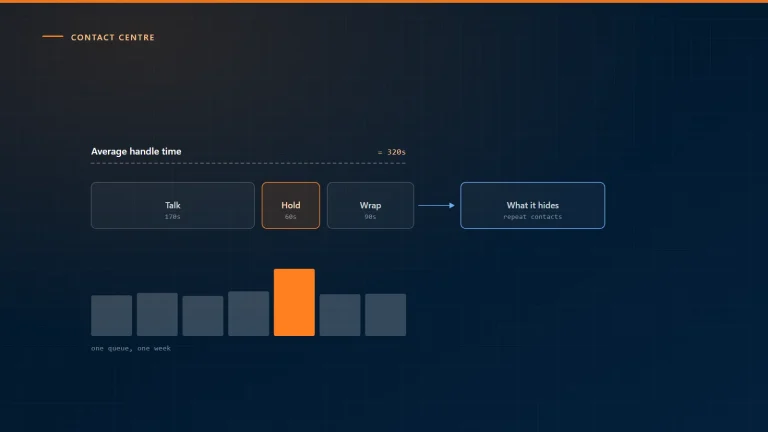
Average handle time tells you less than you think
AHT is the easiest contact center metric to move and the easiest to move the wrong way. What it measures, what it hides, and the three numbers to read beside it.
Four stages, in the order they happen. What decides the dates is usually contracting and access rather than availability, so the honest version is worth reading before the first call.
We look at what already exists, agree what the problem actually is, and produce a plan with costs and sequencing against it. A proposal argues for the work before anyone has examined it; a discovery finds out whether the work is the right work.
What sets the start date is contracting and getting the team access to your systems, rather than whether people are free. It is worth knowing which one it is, because access is the half you can move from your side.
Nearshore and offshore models are both available, and which one you get is a decision rather than a default. The working-hour overlap is agreed before work starts, so it is a term of the engagement and not something discovered in the first sprint.
Source, infrastructure definitions and runbooks live in your repositories and your accounts throughout, not in ours. That is what makes the last step possible: a clean handover is a normal way for an engagement to end here, and we plan for it rather than treating it as a loss.
The same answers we give on a first call, written down so you do not have to book one to get them.
Three broad areas: cloud and infrastructure services, application and product engineering, and the telecom and business software products we build ourselves. Engagements range from a four-week advisory piece to a managed service running for years.
With a scoped discovery rather than a proposal. We look at what exists, agree what the problem actually is, and produce a plan with costs and sequencing. That plan is yours whether or not the work continues with us.
We work with organisations from a few dozen staff to several thousand. The question that matters more than size is whether the problem is well enough defined to scope, and discovery exists to answer that.
Delivery centres in India, with offices in the United States and the United Kingdom, serving clients across fifteen countries. Nearshore and offshore delivery models are both available, with working-hour overlap agreed before anyone starts.
Two to four weeks for most engagements, driven by contracting and access rather than by availability. Staff augmentation placements for common skill sets can be faster; anything requiring scarce expertise takes longer and we say so up front.
You do, from the first commit. Source, infrastructure definitions and runbooks live in your repositories and accounts throughout, not in ours. A clean handover is a normal way for an engagement to end and we plan for it.
Sector experience shapes the answer as much as the technology does, and it shortens discovery.
What we are seeing across cloud, engineering and the sectors we work in.
AHT is the easiest contact center metric to move and the easiest to move the wrong way. What it measures, what it hides, and the three numbers to read beside it.
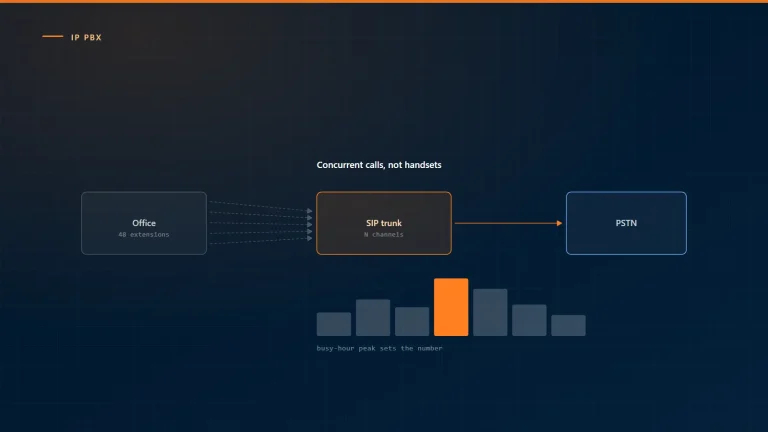
Trunk sizing is an Erlang calculation, not a headcount. How to work out the number, and why buying one channel per extension wastes most of what you pay for.
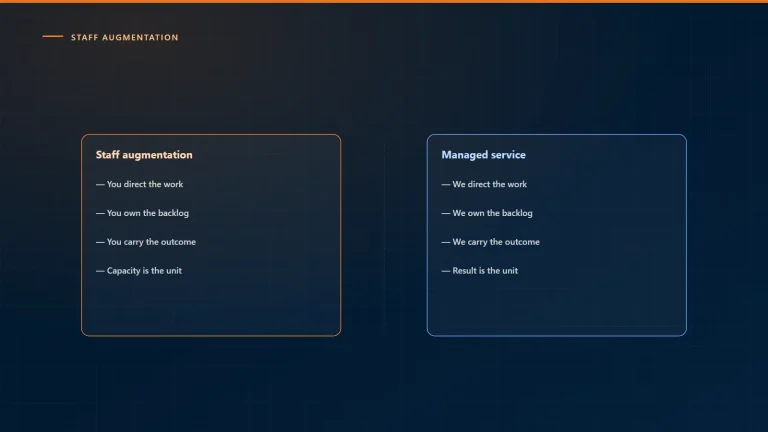
Both put people you do not employ on your work. The difference is who owns the outcome, and getting that wrong produces a contract neither side can deliver.
We empower your vision with innovative and effective strategies.
AI-powered assistant for services, careers & support
So we can assist you better