Transforming the Insurance Industry with Innovative Solutions

Insurance runs on evidence. Not intent, not policy documents, not what a team believes its controls to be — evidence that can be produced later, for a specific transaction, to someone who was not there at the time. That single requirement shapes more of an insurer’s technology estate than any other factor.
What “provable” means in practice
Access control that is correct is not the same as access control that is demonstrable. The question an auditor asks is not “who can see this data” but “who saw this record, on this date, and what did they change”. Answering it means the access log is a designed part of the system rather than a side effect of the database.
That has a storage consequence people underestimate. Retention schedules for insurance records are measured in years after the policy ends, not years after it was written, and the log volume scales with activity rather than with policy count. A system generating a few million access events a month, retained for the full period, is a storage plan of its own — and it has to be a plan, because discovering it as a surprise mid-audit is how retention gets quietly shortened.
Claims is where the operational cost concentrates
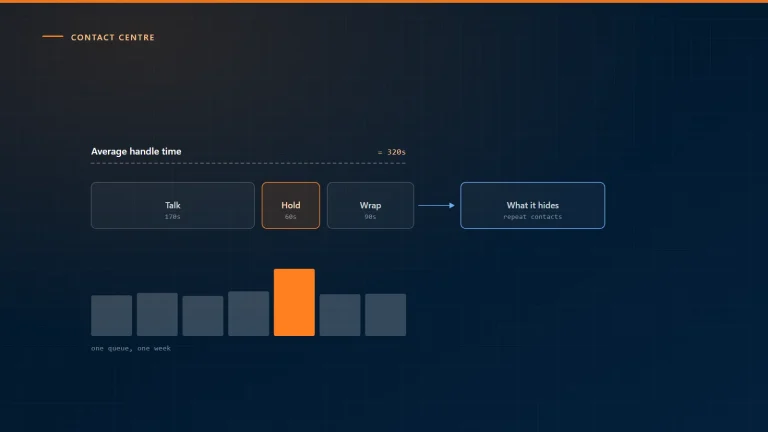
The measurements that matter in claims are rarely the ones on the dashboard:
- Touches per claim.How many times a human picks the file up. Straight-through claims cost a fraction of touched ones, and the ratio is the single clearest indicator of process health.
- Time in each state, not end to end.A forty-day average tells you nothing; forty days of which thirty-one are waiting for one document tells you exactly where to work.
- Rework rate.Claims reopened or re-decided. Usually points at a decision made without information that was available.
- Document chase volume.How often the insurer asks the claimant for something. Often the largest single driver of claim duration and the most reducible.
An operation reporting only average settlement time cannot distinguish a slow assessor from a slow document flow, and those have opposite fixes.
Data residency is an architecture constraint, not a checkbox
Where policyholder data may physically sit constrains which regions, which providers and which backup destinations are available — including for disaster recovery, which is the place it is most often overlooked. A recovery plan that restores into a region the data may not occupy is not a recovery plan.
This is worth settling before the architecture rather than discovering during the first failover test.
The legacy question
Most insurers run at least one system that is old, load-bearing, and understood by very few people. Replacing it is expensive and risky; leaving it is also risky, in a way that compounds quietly. The practical middle path is to stop adding to it — put new functionality alongside rather than inside, behind a defined interface — so that the eventual replacement is a smaller piece of work than it would otherwise be.
That decision is worth making explicitly. Made by default, it is always “add it to the old system”, because that is the path of least resistance this quarter.
We run managed infrastructure and application management for regulated environments, including the log retention and recovery-testing side of it. If your access logs have never been produced under time pressure, that is a rehearsal worth having.